
Faster Turnaround and Pinpoint Consistency Across Every Sign Type
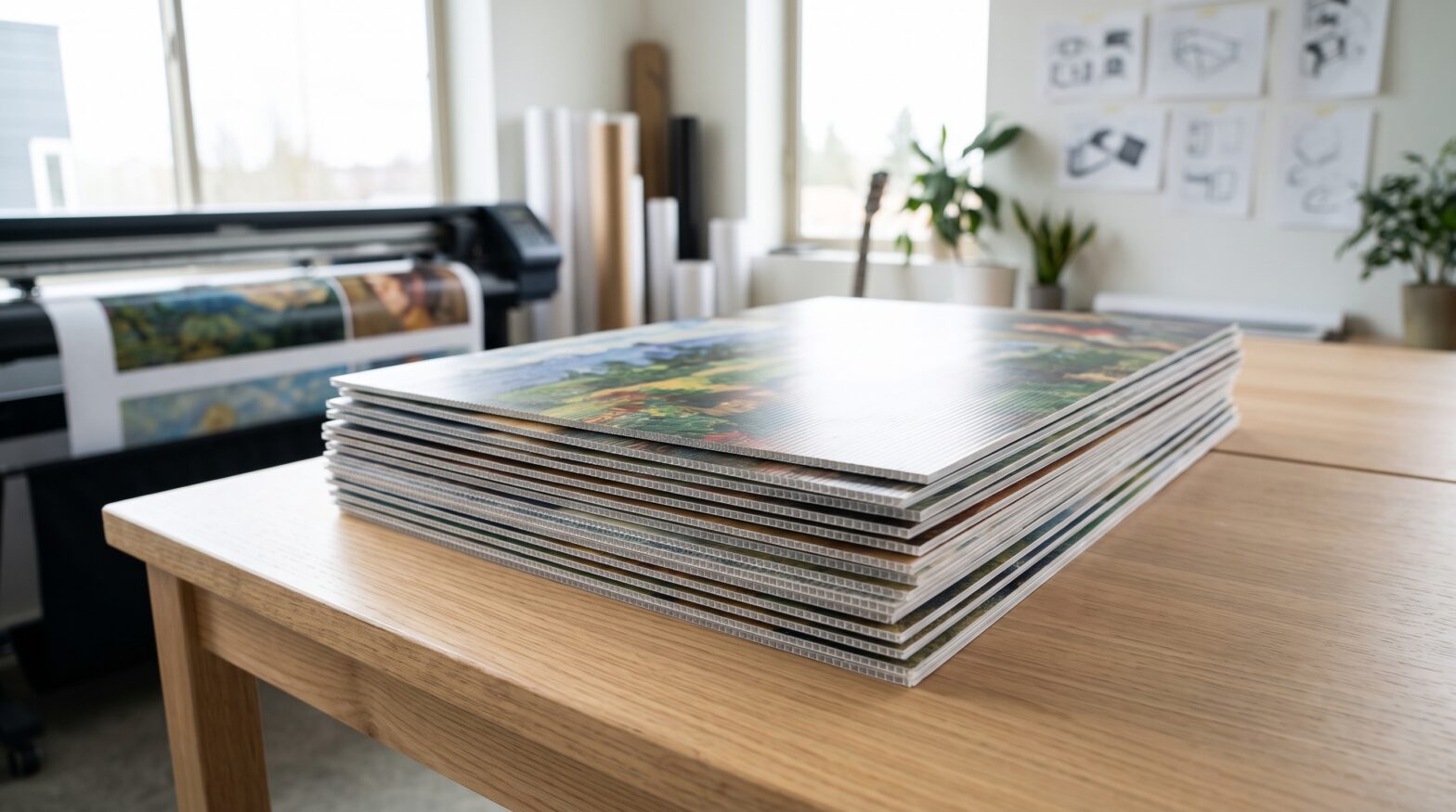
Eliminating the lamination and hand-mounting stages does more than improve durability; it transforms production efficiency and consistency. Whether you need a single architectural panel or a hundred promotional boards, every print is registered with digital precision. Here is how direct flatbed production elevates specific signage categories across your business:
1. Commercial Building Signage and Facades
Your exterior building signage is your hardest-working salesperson. Direct printing onto heavy-duty ACM (Alupanel) creates crisp, weather-resistant storefront signs, monument inserts, and wayfinding panels. Paired with our CNC routing capabilities, we can print and contour-cut dimensional signage elements that stand up to years of UV exposure without fading or cracking.
2. Real Estate Signage and Construction Site Boards
Realtor signage, property management boards, and construction safety signs endure constant handling. They get tossed into truck beds, staked into frozen ground, and blasted by gravel and wind. Direct-printed Coroplast and aluminum real estate signage cures with a hard, scratch-resistant finish. Because we print directly onto both sides of the sheet with high-speed registration, you get faster turnarounds and identical brand colors on every single listing sign.
3. Interior Signage and Dimensional Acrylic Displays
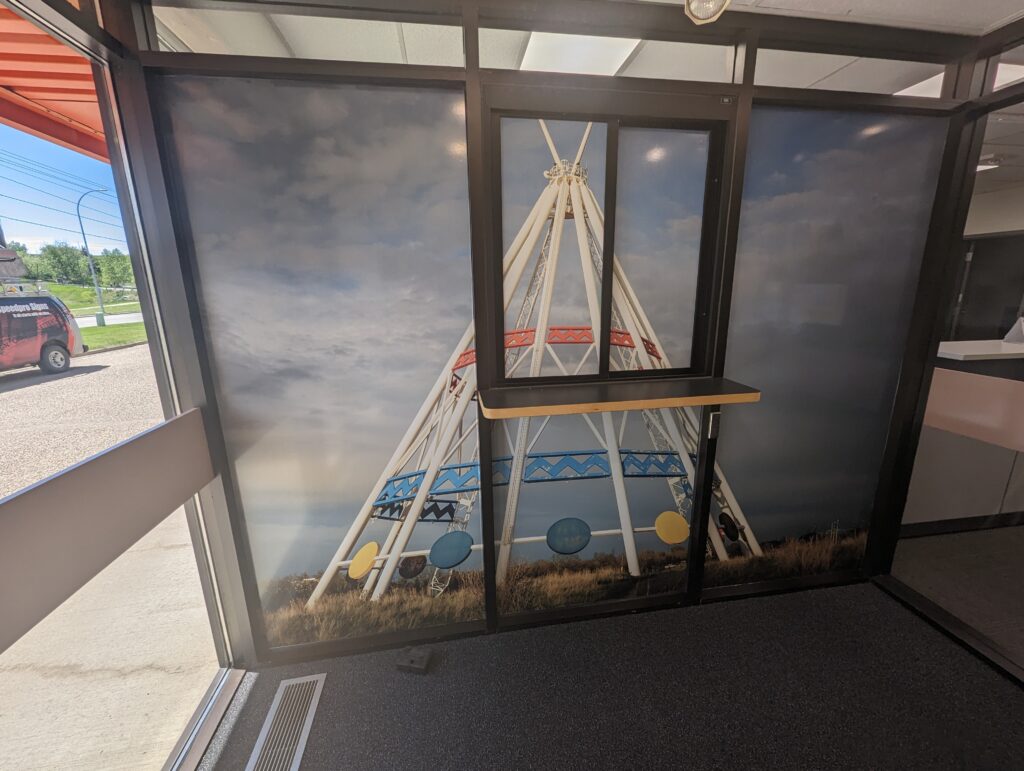
When clients step into your reception area or boardroom, they view your interior signage from just feet away. Direct flatbed printing onto clear acrylic, PVC (Komacel), brushed metal, or wood delivers a gallery-quality architectural finish. There are no splice seams, no squeegee marks, and no edge lifting.
4. Tradeshow Displays and Promotional Signage
Standing out at a Medicine Hat trade show or regional convention requires bold, flawless graphics. We print edge-to-edge visuals directly onto rigid foam boards, PVC display headers, and custom promotional items. Because the UV ink cures instantly, sheets move straight from the flatbed to our cutter for custom-shaped standees, tabletop displays, and event signage with zero vinyl tearing along the routed edges.
In traditional CMYK printing, printers assume your material is bright white. Standard cyan, magenta, yellow, and black inks are translucent; if you print them directly onto clear acrylic, dark wood, or brushed silver aluminum, the colors look dark, muddy, and washed out.Integrating a dedicated, high-opacity white ink channel unlocks design possibilities that used to require expensive multi-layer vinyl assembly:
Improves Page Scannability and Mobile Experience: If a blog post covers complex topics like city sign permitting, material specifications (such as Alupanel vs. Komacel), or frequently asked questions about vehicle wrap care, placing those details under accordion titles keeps the page clean. Readers on mobile phones do not have to scroll past a massive wall of text to find the exact question they care about.
Organizes FAQ Sections: Accordion titles are most commonly used for Frequently Asked Questions at the bottom of a blog post or service page. Each question serves as an accordion title, and the answer sits inside the expandable drawer.
Boosts SEO and Google Rich Snippets: Search engines crawl and index the text inside closed accordions just as effectively as visible text, provided the content is loaded in the standard HTML. When you use Rank Math’s built-in FAQ Schema Block (which can be styled as an accordion), those accordion titles become eligible to appear directly on Google Search results pages as interactive drop-down questions under your website link.
Increases User Engagement Signals: Every time a visitor clicks an accordion title to read an answer, it registers as an interaction on your site, helping readers stay engaged with your content longer without feeling overwhelmed.
Heading Tag Structure (H2, H3, H4): In WordPress block editors (like Gutenberg, Elementor, or Divi), you can set the HTML tag of the accordion title itself. Setting your accordion titles to H3 or H4 tags allows you to naturally include secondary keywords (like building signage Medicine Hat, realtor signage, or LED signs) in a way that Rank Math recognizes for your subheading SEO score.