

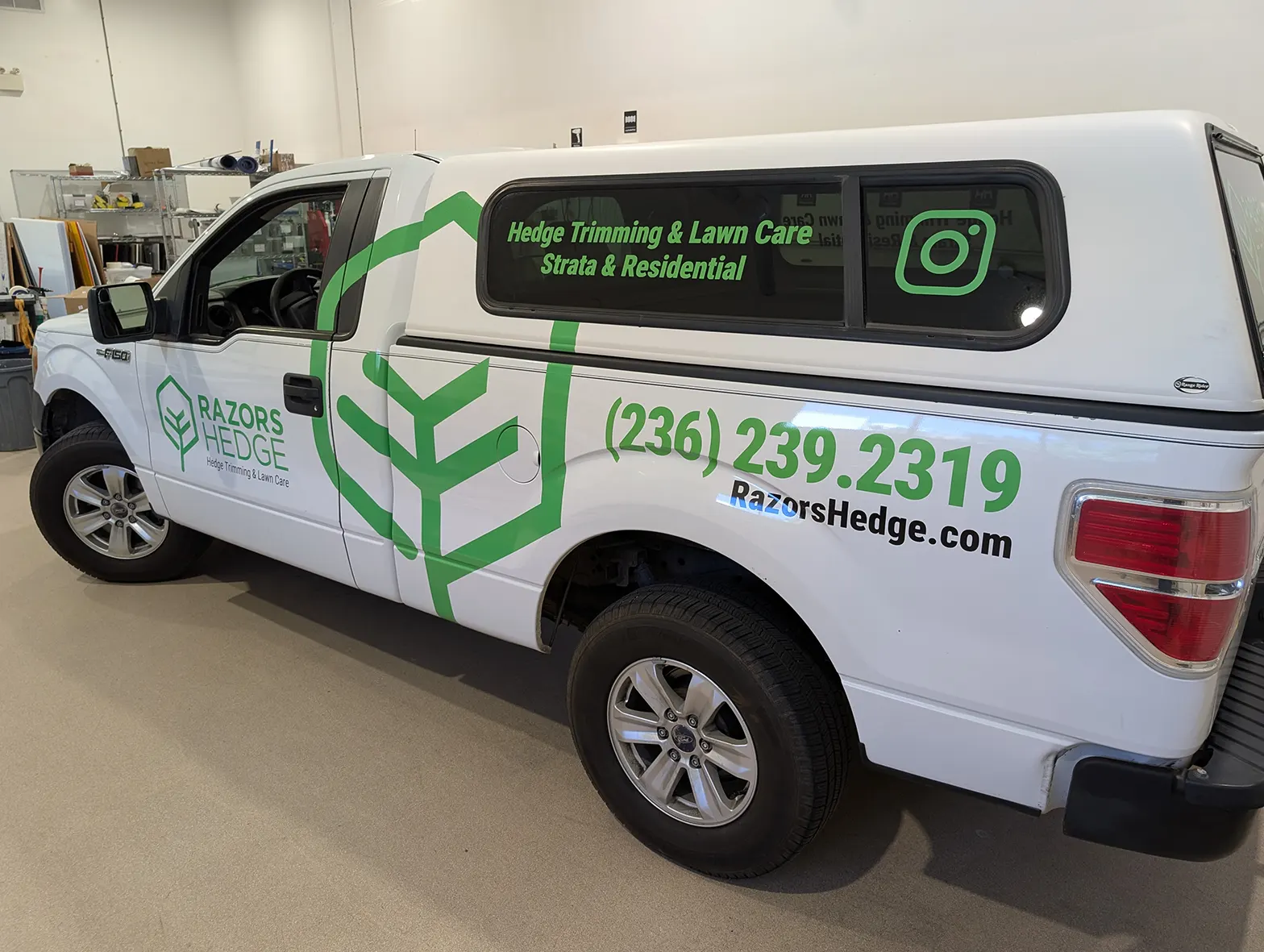
Designing on a computer is very different from designing for the side of a truck, van, or car.
On screen, everything is flat and easy to control. A logo can be centred perfectly, text can sit neatly underneath it and every part of the design stays visible. A real vehicle has doors, handles, windows, seams, wheel wells, bumpers, trim and curved panels. Those features can completely change how the same design looks once it leaves the screen.
Good vehicle wrap design starts by treating the vehicle as part of the layout, not just the surface the artwork will be placed on.
Designing for the Actual Vehicle
Vehicle templates are a useful place to start. They show the basic shape and dimensions of a particular make and model, making it easier to map out the first version of the wrap.
The final layout still needs to be checked against the actual vehicle. Different trim levels, accessories and body details can change the amount of usable space or introduce features that aren’t obvious on the template.
For example, a phone number might look perfectly placed on a work van until the sliding-door handle covers one of the digits. A website could land across a panel seam, or a wheel well could push part of the service list out of view.
Reviewing the vehicle before production helps catch these problems early, while the layout can still be adjusted.
Each Side Needs Its Own Layout
A vehicle isn’t like a poster that people only see from the front. People might see it from the driver’s side in traffic, from behind at a stoplight, or from the passenger side when it’s parked at a job site.
Each angle needs to communicate something useful on its own.
This doesn’t mean every side needs the same information in the same spot. The company logo might look good on both doors, while the back is a better place for a phone number or website. The front might only need a small logo or brand color to tie it in with the rest of the wrap.
The design should feel consistent as someone moves around the vehicle, but it shouldn’t depend on one exact viewing angle to make sense.
Keep Important Details Away From Obstacles
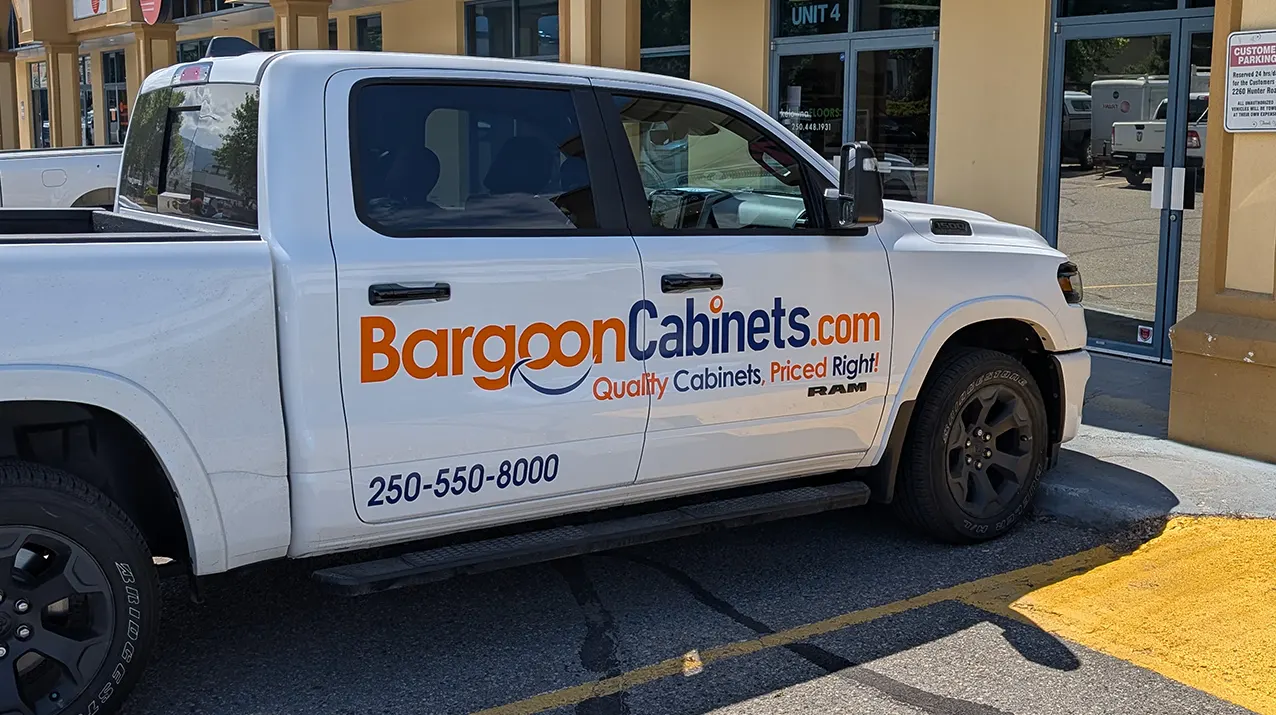
Logos, phone numbers and web addresses need some clear space around them. Placing them too close to a door edge, body seam or handle makes installation less forgiving and can leave the finished wrap looking cramped.
Curves require extra care as well. A straight line in the artwork may appear to rise or dip once it follows the shape of a panel. Text that wraps around a corner can become difficult to read. Photos can distort when faces or other recognizable details land across deep curves, handles or door gaps.
Background colours, patterns and textures tend to handle these areas better. Important words and images are usually more effective on the flatter, more visible sections of the vehicle.
People Only Have a Few Seconds to Read It
A wrapped vehicle is often moving, and so is the person looking at it. That leaves very little time to work out what the business does.
A car wrap covered with service lists, slogans, social handles, certifications and several calls to action may include plenty of information, but very little of it will be remembered.
The strongest wraps tend to focus on a few basics: the company name, the service and one clear way to get in touch. Bold colour, readable type and a strong visual can do more than a complicated layout filled with small details.
If the main message isn’t clear when the proof is viewed from across the room or reduced on screen, it probably won’t be clear to someone passing the vehicle in traffic.
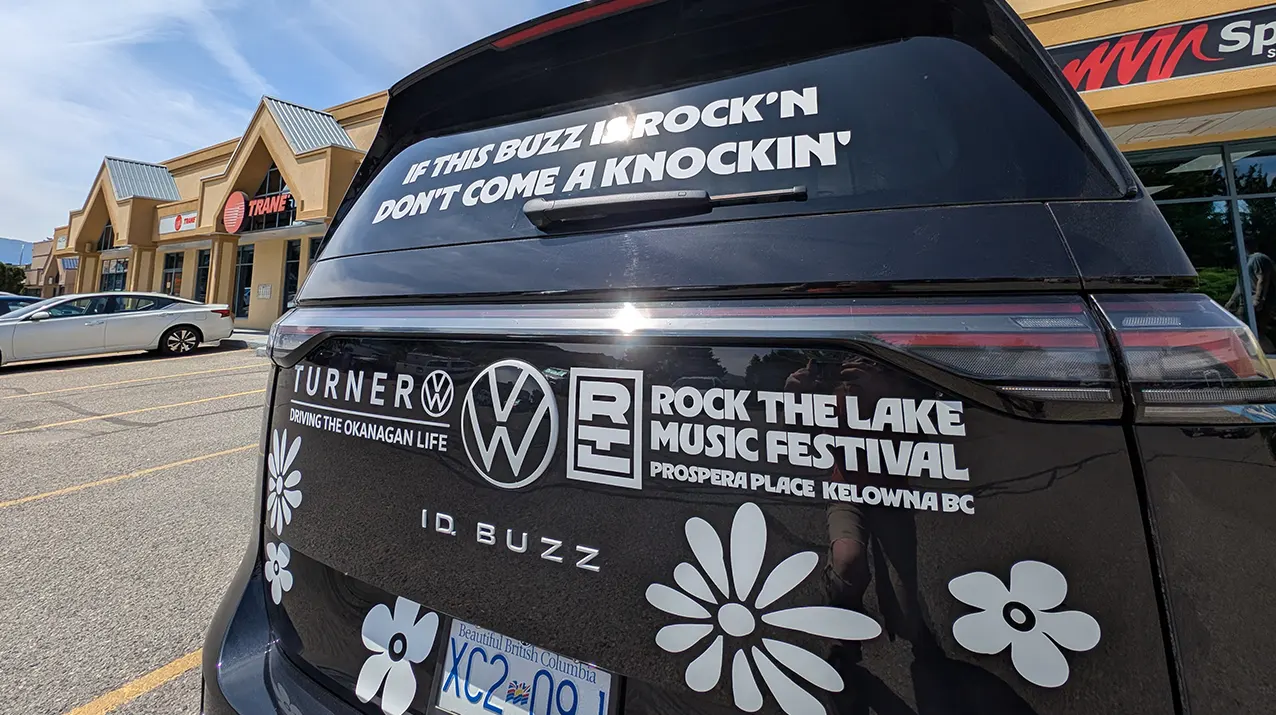
The Design Still Has to Be Produced
The artwork also needs to fit the printing and installation process.
It’s best to provide logos and lettering as vector files, since they can be enlarged without getting blurry. Photos need to have enough resolution for the size they’ll be printed. An image that looks sharp on a website might not look good when stretched across a van panel.
A full wrap is also printed in sections rather than as one vehicle-sized piece. Those sections need overlap and extra material around edges so the installer can position and finish them properly. Keeping critical text away from these areas gives the production team more room to work.
Vehicle size, condition, shape and material choice create a wide range of production considerations. That’s why design, printing and installation should be planned together instead of treated as separate steps.
SpeedPro Kelowna designs, produces, and installs custom vehicle wraps and graphics for cars, trucks, vans, trailers, and fleets. Contact us to create graphics that fit your vehicle, communicate clearly, and look just as good on the road as they did in the original design.


